
 Erik Laubscher is a South African artist who spent the best part of 60 years exploring, taking in and portraying South Africa’s landscapes. He particularly admired the Overberg and Swartland regions. These landscapes presented him with more than just a smell or a memory, these experiences represented some kind of spiritual significance. Over the last few decades Laubscher took keen interest in capturing the detail and depth of the sceneries he composed. He managed to combine lines, forms, colours and textures into a well-structured piece of art. Laubscher succeeded to invite one into his art, celebrating the intricate beauty of the land.
Laubscher was a well-repsected artist among his peers, approaching landscapes with the eye of a photographer. Travelling around the Western Cape he was often reliant on luck, in order to be in a certain place at certain time to capture an image which would last only a few seconds. He regarded his art as a privilege, recreating landscapes or showcasing an array of moods through his experience.
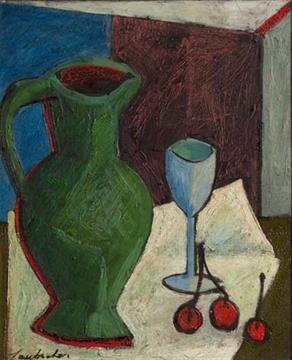
 If you pay careful attention to Erik Laubscher’s career you might notice a golden string of greatness running throughout. As a youngster he was recognised as a promising young experimental artists and by the 60’s he was one of the country’s leading abstract painters. He managed to create a unique identity when it would have been easier to fit the mould.


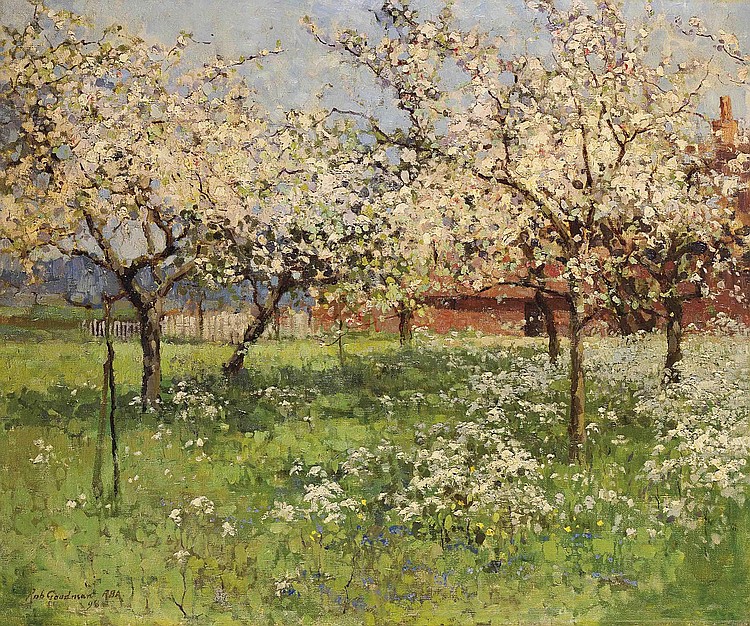 t months before his death. Goodman was commissioned to do 10 paintings for the South Africa House in London. His final exhibition was held at the Argus Gallery in Cape Town. Many pundits describing this as his only exhibition that failed financially. Robert Gwelo Goodman died at his Cape Town home in 1939, as a result of a stroke.


